

Tax season can be stressful for individuals and business owners, especially when financial records are incomplete, deadlines are approaching, or tax rules are difficult to understand. Preparing a tax return involves more than entering numbers on forms. It requires accurate documentation, an understanding of applicable tax requirements, and careful attention to details that can affect your financial position.
Professional Tax Services in Massachusetts can help individuals and businesses organize their financial information, prepare accurate returns, and better understand their tax responsibilities. Working with an experienced tax professional can also make it easier to identify potential issues before filing and determine when additional guidance may be necessary.
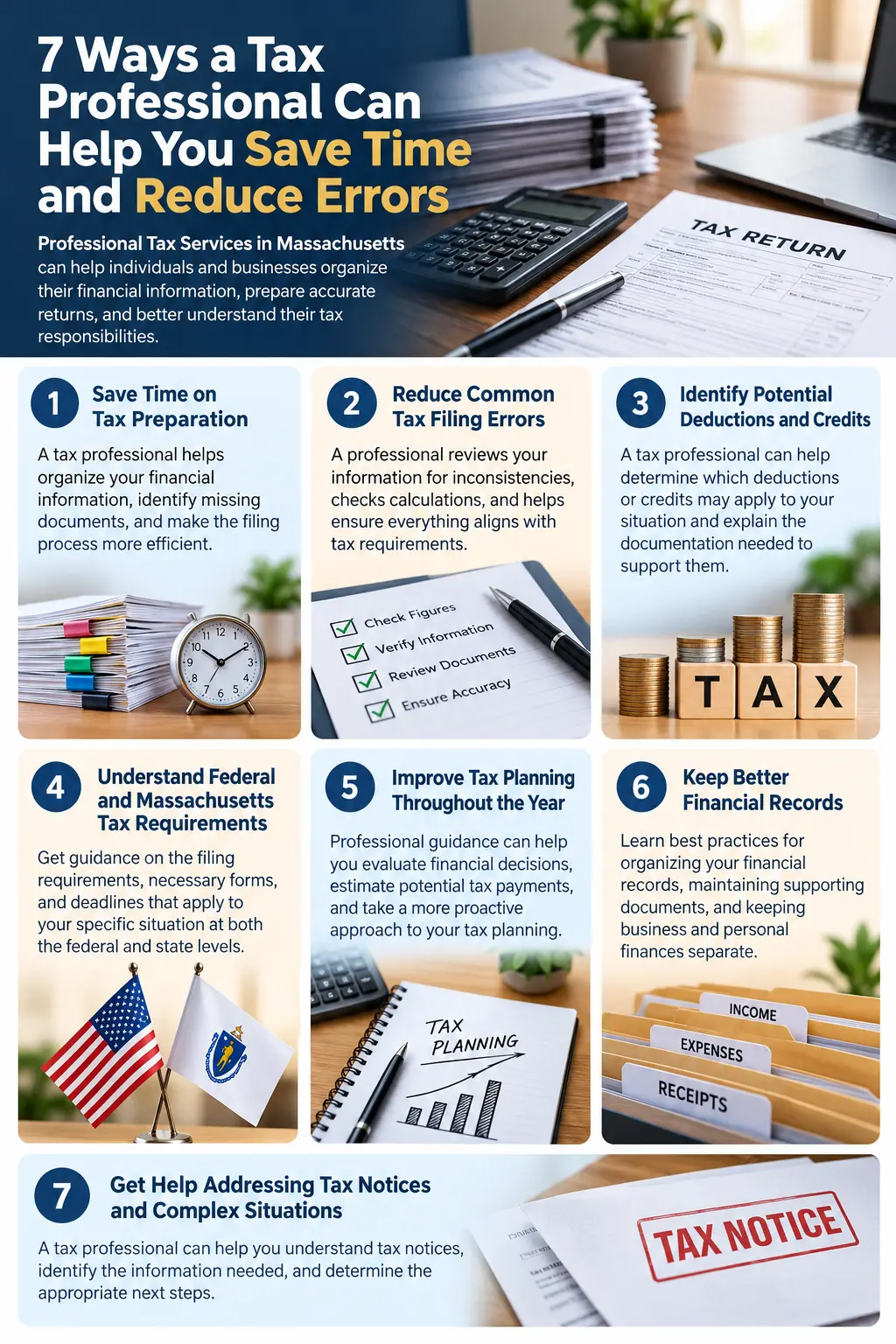
At Kent, Parker & Associates (KPA), individuals and business owners can explore professional tax support based on their financial circumstances and reporting needs. Here are seven ways working with a tax professional can help you save time and reduce avoidable errors.
1. Save Time on Tax Preparation
Gathering receipts, reviewing income statements, organizing expenses, and completing tax forms can take considerable time. Business owners may also need to coordinate information from bookkeeping records, payroll reports, bank statements, and other financial documents.
A tax professional can help organize the information required for filing and identify missing documents before the preparation process is complete. This can reduce the time spent searching for records and correcting incomplete information.
For business owners, maintaining organized financial records throughout the year can make tax preparation more manageable. Instead of waiting until the deadline approaches, you can follow a more consistent process for gathering and reviewing the necessary documents.
2. Reduce Common Tax Filing Errors
Small mistakes can create unnecessary complications. Incorrect figures, missing income information, duplicate expense entries, and inconsistent records may lead to questions or the need to amend a return.
A tax professional can review financial information for inconsistencies, check calculations, and confirm that the information provided aligns with the applicable filing requirements. You should still review your return and provide complete, accurate information, but professional assistance can add an important layer of review.
Common issues to watch for include:
- Reporting income incorrectly or leaving out required income information.
- Claiming expenses without sufficient supporting documentation.
- Entering incorrect personal or business information.
- Overlooking relevant forms or schedules.
- Missing filing or payment deadlines.
Careful preparation and review can help reduce these avoidable problems.
3. Identify Potentially Applicable Tax Deductions and Credits
Tax deductions and credits may affect how much tax you owe, but eligibility depends on your circumstances and the rules that apply to the relevant tax year.
Individuals may need to review qualifying expenses, income information, and life changes that affect their tax situation. Business owners may need to examine eligible operating expenses, payroll-related costs, equipment purchases, and other business transactions.
A tax professional can help determine which deductions or credits may apply and explain what documentation is needed to support them. Not every expense qualifies, and claiming an item without meeting the requirements can create problems later.
Keeping organized receipts, invoices, and financial statements throughout the year makes it easier to evaluate potential tax benefits when filing.
4. Understand Federal and Massachusetts Tax Requirements
Massachusetts taxpayers may have obligations at both the federal and state levels. Although some information overlaps, state and federal tax rules are not identical, and filing requirements can vary depending on income, residency, business activities, and other factors.
For example, a self-employed individual may need to consider business income and estimated tax payments, while a company may have additional reporting responsibilities based on its structure and activities.
Professional guidance can help you understand which returns may be required, what information you need to provide, and which deadlines apply to your situation. Because tax rules can change, it is important to use guidance that reflects the relevant tax year rather than relying solely on outdated articles or previous filing practices.
5. Improve Tax Planning Throughout the Year
Tax preparation generally focuses on reporting financial activity for a completed tax year. Tax planning, on the other hand, looks ahead and considers how current financial decisions may affect future tax obligations.
For businesses, planning may involve reviewing expected revenue, evaluating major purchases, monitoring cash flow, and estimating potential tax payments. Individuals may benefit from reviewing withholding, anticipated income changes, or other financial events that could affect their tax position.
Professional guidance can help you evaluate available options before making significant financial decisions. While no one can guarantee a particular tax outcome, planning ahead can help reduce surprises and support better financial decisions.
6. Keep Better Financial Records
Accurate recordkeeping is essential for tax preparation. Without reliable documentation, it can be difficult to verify income, support deductions, reconcile transactions, or respond to questions about a filed return.
A tax professional may recommend ways to improve the organization of your financial records, including maintaining separate business and personal accounts, categorizing expenses consistently, and keeping supporting documents in an accessible location.
Business owners should also ensure that bookkeeping records are updated regularly and reconciled against bank and credit card statements. Better records can simplify tax preparation and provide a clearer picture of business performance throughout the year.
7. Get Help Addressing Tax Notices and Complex Situations
Receiving a tax notice can be confusing, particularly when it requests additional information, identifies a discrepancy, or states that a balance may be due. Ignoring a notice or missing its response deadline can make the situation more difficult.
A tax professional can help you understand what a notice is requesting, identify relevant financial documents, and determine the appropriate next steps. Depending on the issue, you may need additional tax resolution support or assistance communicating with the relevant tax authority.
If you receive a notice, review it carefully, pay attention to the stated deadlines, and seek qualified guidance when necessary. Keep copies of the notice and any documents or correspondence related to the matter.
When Should You Hire a Tax Professional?
Professional assistance may be especially useful if you own a business, have multiple sources of income, are self-employed, have experienced a major financial change, or need help understanding a tax notice. It may also be worth considering if preparing your return takes too much time or you are uncertain about your filing responsibilities.
When comparing Tax Services in Massachusetts, look for a provider who explains the process clearly, identifies the documents needed, and understands the requirements relevant to your situation. Ask about the scope of the service, expected timelines, fees, and whether support is available if questions arise after filing.
Get Professional Tax Support From Kent, Parker & Associates
Managing taxes does not have to mean handling every detail on your own. Organized records, careful preparation, and informed planning can help you approach tax obligations with greater confidence.
Kent, Parker & Associates can help individuals and businesses explore tax support based on their needs. Learn more about our Tax Services in Massachusetts to understand how professional assistance may fit your situation.
For guidance on your tax needs, contact KPA at (508) 457-1700 or visit our Contact Us page to discuss the next steps.